
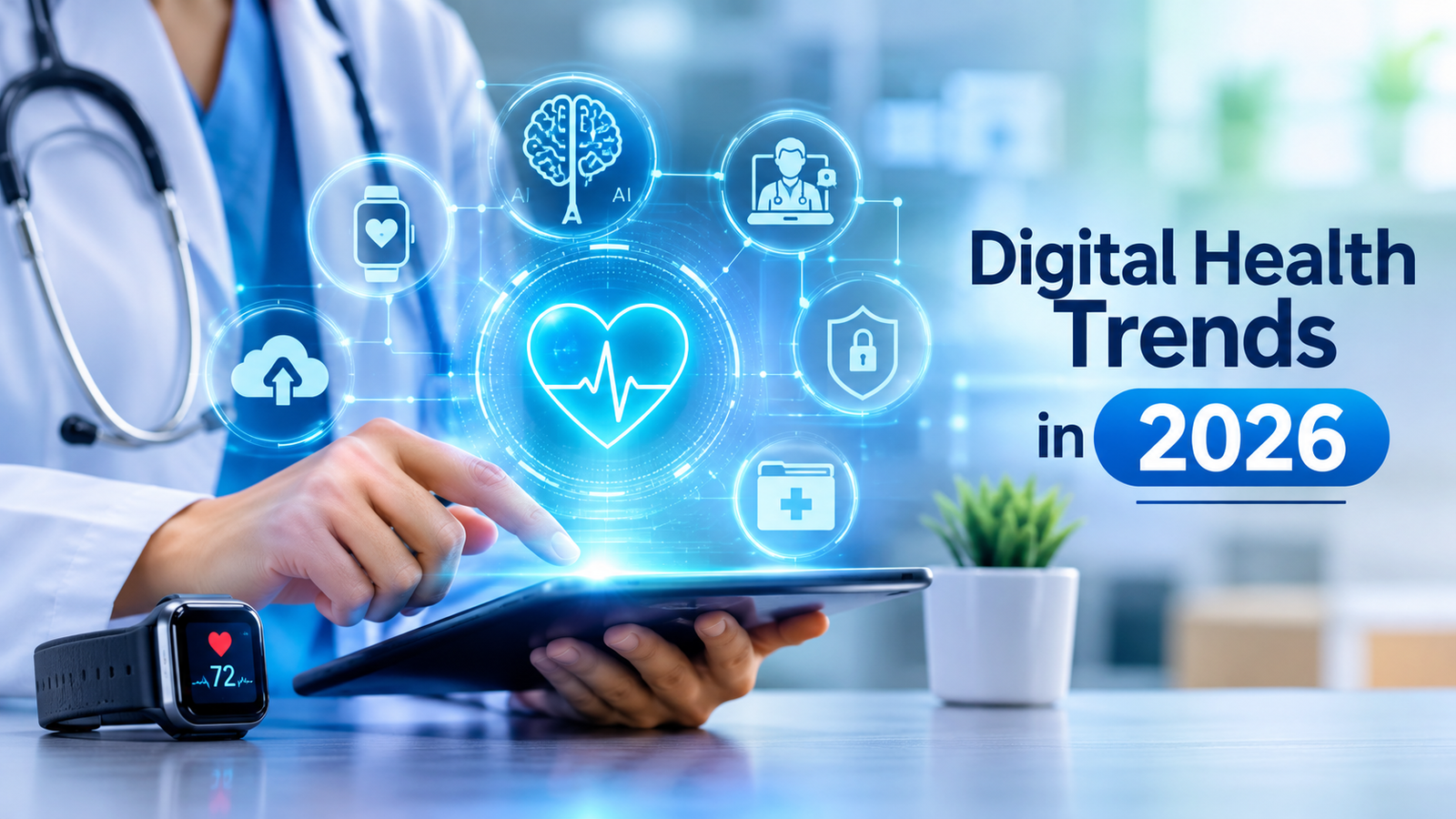
Digital technology is changing how healthcare is delivered, managed, and experienced. From artificial intelligence (AI) and wearable health devices to virtual consultations and remote patient monitoring, digital health solutions are becoming an increasingly important part of modern healthcare systems.
In 2026, the focus is shifting beyond simply introducing new medical technologies. Healthcare organizations are increasingly looking at how digital tools can support better clinical decisions, improve access to healthcare services, streamline administrative tasks, and help patients participate more actively in their care.
The World Health Organization (WHO) continues to promote digital health as an important part of stronger, more accessible, and people-centered healthcare systems. Its Global Strategy on Digital Health has been extended through 2027, reflecting the continued importance of digital transformation in healthcare worldwide.
But these developments also introduce challenges involving patient privacy, cybersecurity, accuracy, affordability, and responsible use.
In this article, we explore 10 important digital health trends in 2026, how these technologies work, where they may provide value, and what challenges healthcare providers and patients should understand.
What Is Digital Health?
Digital health refers to the use of digital technologies to support healthcare services, medical research, health information management, disease prevention, and patient care.
It includes a wide range of technologies, such as:
- Artificial intelligence in healthcare.
- Telehealth and virtual consultations.
- Wearable health technology.
- Remote patient monitoring.
- Electronic health records.
- Digital health applications.
- AI-assisted medical imaging.
- Connected medical devices.
- Digital therapeutics.
- Healthcare data analytics.
These technologies can help connect patients, healthcare professionals, medical institutions, and health information systems.
However, digital health is not simply about adopting new devices or applications. Its real value depends on whether technology is safe, reliable, accessible, and useful in actual healthcare settings.
10 Major Digital Health Trends in 2026
1. Artificial Intelligence Is Becoming More Important in Healthcare
Artificial intelligence is one of the most significant developments influencing digital healthcare in 2026.
AI systems can analyze large amounts of medical information, identify patterns, assist with certain clinical tasks, and help healthcare professionals organize information more efficiently.
Some healthcare applications include:
- Supporting the analysis of medical images.
- Helping identify patterns in clinical data.
- Assisting with medical documentation.
- Supporting administrative workflows.
- Helping researchers analyze medical datasets.
- Providing decision-support information to healthcare professionals.
For example, AI-assisted medical imaging tools can help analyze X-rays, CT scans, and other diagnostic images. Depending on the specific tool and its authorized intended use, these systems may help clinicians identify areas that require further examination.
The U.S. Food and Drug Administration (FDA) maintains a list of AI-enabled medical devices authorized for marketing in the United States. This demonstrates that AI is already being incorporated into specific regulated medical technologies.
However, AI systems are not automatically accurate simply because they use advanced algorithms. Their performance can vary depending on the data, clinical setting, intended use, and patient population.
What to expect in 2026: Greater integration of AI-assisted tools into selected clinical and administrative workflows, with increasing attention to validation, transparency, and human oversight.
2. Remote Patient Monitoring Is Expanding Access to Healthcare
Remote patient monitoring (RPM) allows healthcare professionals to receive health-related information from patients without requiring every measurement to take place inside a medical facility.
Patients may use connected medical devices to collect information such as:
- Blood pressure.
- Blood glucose levels.
- Body weight.
- Heart rate.
- Oxygen saturation, when supported by an appropriate device.
The collected information can be transmitted to healthcare providers through secure digital systems.
For example, a patient managing a long-term health condition may use a connected blood pressure monitor at home. The readings can be shared with their healthcare team, allowing professionals to review relevant information and determine whether follow-up is necessary.
The U.S. Centers for Medicare & Medicaid Services describes remote patient monitoring as a process involving connected medical devices that transmit patient health information to healthcare providers.
RPM may reduce the need for some routine in-person visits and help healthcare teams monitor patients between appointments. However, it requires reliable devices, appropriate patient education, secure data transmission, and a clear clinical response process.
What to expect in 2026: More healthcare organizations are exploring remote monitoring programs as part of virtual care and long-term condition management.
3. Wearable Health Technology Is Providing More Personal Health Information
Wearable technology has developed beyond basic fitness tracking.
Modern smartwatches, fitness bands, and other wearable devices can collect different types of health-related information through built-in sensors.
Depending on the device, available features may include:
- Heart rate tracking.
- Sleep monitoring.
- Physical activity tracking.
- Blood oxygen measurements.
- Selected heart rhythm notifications.
- Other wellness-related measurements.
These features can help users understand patterns in their daily activity and share selected information with healthcare professionals.
For example, a person may use a smartwatch to monitor physical activity and sleep patterns over time. This information can provide additional context during a healthcare consultation.
However, not every wearable device is a medical device. Wellness features should not automatically be treated as clinically validated diagnostic tools.
A 2026 assessment by the U.S. Government Accountability Office examined the potential benefits and challenges of wearable technologies in clinical decision-making. It highlighted opportunities for patient care while also identifying concerns about device reliability and integration into clinical workflows.
What to expect in 2026: Greater interest in connecting wearable health data with healthcare services, alongside stronger attention to measurement accuracy and appropriate clinical use.
4. Telehealth Is Making Healthcare Services More Flexible
Telehealth uses digital communication technologies to provide healthcare services remotely.
Patients can communicate with healthcare professionals through video consultations, telephone calls, secure messaging, and other digital platforms.
Telehealth can be useful for:
- Follow-up appointments.
- General health consultations.
- Reviewing test results.
- Certain mental health services.
- Medication-related discussions.
- Selected chronic disease management services.
For people living in rural or underserved areas, virtual consultations may reduce travel requirements and make some healthcare services easier to access.
However, telehealth is not appropriate for every medical situation. Some conditions require physical examinations, diagnostic testing, emergency treatment, or direct medical supervision.
Healthcare providers must also consider patient privacy, internet availability, digital literacy, and local healthcare regulations.
What to expect in 2026: Telehealth will continue to be an important part of hybrid healthcare models that combine virtual services with traditional in-person care.
5. Digital Health Applications Are Supporting Patient Engagement
Digital health applications are helping people access health information and manage selected aspects of their healthcare through smartphones and other connected devices.
These applications may provide features such as:
- Appointment scheduling.
- Medication reminders.
- Access to health records.
- Fitness and activity tracking.
- Health education.
- Communication with healthcare providers.
- Symptom and wellness tracking.
Some applications are designed for general wellness, while others are developed for specific healthcare purposes.
For example, a patient may use a healthcare application to manage appointments, review available laboratory results, and communicate with a medical professional.
The quality and reliability of these applications vary. Users should understand what information an application collects, how it stores personal data, and whether its medical claims are supported by evidence.
Healthcare organizations should also evaluate whether an application meets relevant privacy, security, accessibility, and regulatory requirements.
What to expect in 2026: More emphasis on connecting patient-facing applications with healthcare services rather than treating them as isolated digital products.
6. AI-Assisted Medical Imaging and Diagnostics Are Advancing
Medical imaging is another area where artificial intelligence is being applied.
AI-assisted systems can analyze medical images and identify patterns that may require attention from qualified healthcare professionals.
Potential applications include assistance with:
- Radiology image analysis.
- Detection of selected abnormalities.
- Medical image segmentation.
- Measurement and comparison of imaging findings.
- Prioritization of selected imaging cases.
For example, an AI-enabled imaging system may highlight an area of a scan for further review. A qualified clinician can then evaluate the finding alongside the patient’s medical history, symptoms, and other relevant information.
These technologies may help support certain diagnostic workflows, but their effectiveness depends on the specific system, intended use, validation evidence, and clinical environment.
AI-assisted diagnosis should not be confused with independent diagnosis. Healthcare professionals remain responsible for interpreting results and making appropriate clinical decisions.
The FDA’s AI-enabled medical device database provides examples of medical technologies that have undergone applicable U.S. regulatory review.
What to expect in 2026: Continued development of specialized AI tools for medical imaging and selected diagnostic applications, with growing attention to clinical validation and regulatory oversight.
7. Electronic Health Records and Interoperability Are Becoming More Important
Electronic health records (EHRs) allow healthcare organizations to store and manage patient information digitally.
These records may include:
- Medical histories.
- Diagnoses.
- Medication information.
- Laboratory results.
- Clinical notes.
- Treatment records.
- Appointment information.
However, simply storing information electronically does not guarantee that different healthcare systems can exchange it effectively.
This is where interoperability becomes important.
Interoperability refers to the ability of different digital systems to exchange and use information in a meaningful way.
For example, when a patient receives care from multiple healthcare providers, compatible systems may allow relevant medical information to be shared securely, subject to applicable permissions and regulations.
Better interoperability can help reduce information gaps, improve coordination, and support more informed healthcare decisions.
The WHO identifies interoperability and data sharing as important elements of effective digital health systems.
What to expect in 2026: Greater attention to connected healthcare information systems, standardized data exchange, and secure access to relevant patient records.
8. Healthcare Cybersecurity and Patient Data Privacy Are Critical Priorities
As healthcare services become increasingly digital, protecting sensitive patient information is becoming more important.
Medical records can contain personal details, medical histories, test results, and other confidential information. Unauthorized access or data breaches can create serious privacy and operational risks.
Healthcare organizations therefore need strong cybersecurity practices.
Important security measures include:
- Secure authentication.
- Encryption of sensitive information.
- Regular software updates.
- Access controls based on user responsibilities.
- Employee cybersecurity training.
- Data backup and recovery planning.
- Regular security assessments.
- Incident response procedures.
Healthcare providers must also follow the privacy and data protection laws that apply in their jurisdictions.
The WHO’s digital health strategy emphasizes the importance of protecting personal health information and ensuring the confidentiality, integrity, and availability of health data.
Cybersecurity should not be treated as an optional technical feature. It is an essential part of building trust in digital healthcare.
What to expect in 2026: Increased focus on healthcare data protection, cybersecurity preparedness, responsible data sharing, and secure digital infrastructure.
9. Digital Therapeutics Are Developing as a Technology-Supported Care Option
Digital therapeutics are software-based interventions designed for specific health-related purposes.
Unlike general wellness applications, digital therapeutics are intended to deliver structured, evidence-based interventions. Depending on the product and jurisdiction, they may be subject to medical device or other regulatory requirements.
Potential areas of application include:
- Selected behavioral health interventions.
- Certain chronic condition management programs.
- Digital support for lifestyle-related behavior changes.
- Structured therapeutic programs delivered through software.
For example, a digital therapeutic program may guide users through a structured behavioral intervention under an established care model.
However, not every health application qualifies as a digital therapeutic. A product’s claims, clinical evidence, intended use, and regulatory status matter.
Patients and healthcare professionals should evaluate whether a particular product has appropriate evidence and authorization for its intended purpose.
What to expect in 2026: Continued development of software-based therapeutic approaches, with stronger interest in clinical evidence, patient engagement, and appropriate regulation.
10. Healthcare Automation and Data Analytics Are Improving Operational Workflows
Healthcare organizations manage large amounts of information and complex administrative processes.
Digital automation and data analytics can help organizations organize information, identify operational patterns, and reduce certain repetitive tasks.
Examples include:
- Appointment scheduling systems.
- Automated administrative workflows.
- Digital patient registration.
- Healthcare resource planning.
- Clinical data reporting.
- Operational performance dashboards.
- Selected automated documentation processes.
Data analytics can also help healthcare organizations understand service demand, identify operational bottlenecks, and evaluate how resources are being used.
For instance, a hospital may analyze appointment and patient-flow data to identify periods of high demand and improve scheduling.
However, automation must be implemented carefully. Incorrect information, poor system integration, and insufficient human review can create errors.
Healthcare organizations should ensure that automated processes are monitored and that important clinical decisions remain under appropriate professional oversight.
What to expect in 2026: Greater use of automation and analytics to support administrative efficiency, healthcare planning, and selected clinical workflows.
Key Challenges Facing Digital Healthcare in 2026
Although digital health technologies offer important opportunities, their adoption is not without challenges.
Understanding these limitations is essential for healthcare providers, technology developers, policymakers, and patients.
Patient Data Privacy
Digital healthcare systems handle highly sensitive information. Organizations must protect patient data from unauthorized access, misuse, and accidental exposure.
Cybersecurity Threats
Hospitals and healthcare providers depend on digital systems to manage essential services. Cyberattacks and system disruptions can affect operations and create risks for patient care.
Technology Accessibility
Not everyone has access to reliable internet connections, smartphones, modern devices, or the digital skills needed to use healthcare applications.
This can create barriers for older adults, rural communities, and people with limited financial resources.
Accuracy and Reliability
AI systems, wearable devices, and digital health applications can produce inaccurate or incomplete information. Their results must be evaluated according to their intended use and supporting evidence.
Healthcare System Integration
Different healthcare organizations may use incompatible software platforms. Integrating systems and exchanging information securely can require significant technical and financial resources.
Regulation and Accountability
Healthcare technology developers and providers must consider applicable medical device regulations, privacy requirements, clinical standards, and professional responsibilities.
These challenges show why digital transformation should be implemented responsibly rather than focusing only on introducing new technology.
What Does the Future of Digital Healthcare Look Like?
The future of digital healthcare will likely involve closer connections between patients, healthcare professionals, medical devices, and information systems.
Artificial intelligence may support selected clinical tasks, wearable devices may provide additional health information, and remote monitoring may help healthcare teams follow patients between appointments.
At the same time, healthcare organizations will need to invest in secure infrastructure, reliable data exchange, professional training, and appropriate clinical oversight.
The WHO’s Global Strategy on Digital Health 2020–2027 emphasizes people-centered, equitable, and evidence-based digital transformation. This approach highlights an important principle: technology should improve healthcare services rather than become an objective in itself.
The success of digital health will depend not only on technological innovation but also on whether these solutions are safe, accessible, affordable, and genuinely useful.
Frequently Asked Questions About Digital Health Trends 2026
1. What are the biggest digital health trends in 2026?
Some important digital health developments in 2026 include AI-assisted healthcare, remote patient monitoring, wearable health technology, telehealth, electronic health records, medical imaging AI, digital therapeutics, and healthcare cybersecurity.
2. How is AI changing healthcare in 2026?
AI is being incorporated into selected healthcare applications, including medical image analysis, clinical decision-support tools, administrative automation, and medical research. Its use requires appropriate validation, professional oversight, and attention to patient safety.
3. What is remote patient monitoring?
Remote patient monitoring is the use of connected medical devices to collect and transmit patient health information to healthcare professionals. Examples include connected blood pressure monitors, weight scales, and glucose monitoring devices.
4. Are wearable health devices reliable?
Wearable devices can provide useful information about activity, sleep, and selected health measurements. However, their accuracy varies by device and feature. Wellness tracking should not automatically be treated as a medical diagnosis.
5. Will telehealth replace traditional healthcare?
Telehealth is unlikely to replace all in-person healthcare. It can support selected consultations and follow-up services, but physical examinations, diagnostic procedures, emergency care, and other services may require face-to-face treatment.
6. Why is cybersecurity important in digital healthcare?
Healthcare systems store sensitive personal and medical information. Strong cybersecurity helps protect patient privacy, prevent unauthorized access, reduce disruption, and maintain trust in digital healthcare services.
7. What is the difference between digital health and digital therapeutics?
Digital health is a broad term covering technology used across healthcare. Digital therapeutics are a more specific category of software-based interventions designed for health-related therapeutic purposes and supported by appropriate evidence.
Conclusion
Digital health trends in 2026 demonstrate how technology is influencing modern healthcare. Artificial intelligence, wearable devices, remote patient monitoring, telehealth, and connected medical records are creating new opportunities to support healthcare professionals and improve access to selected services.
However, these technologies also require responsible implementation. Patient privacy, cybersecurity, clinical accuracy, accessibility, and professional oversight must remain central to digital healthcare development.
Ultimately, the most valuable digital health innovations will be those that solve real healthcare problems, support informed decisions, and improve the way patients and healthcare professionals interact.
As digital healthcare continues to develop, the priority should remain clear: use technology to make healthcare safer, more accessible, and more effective for people.
Medical Information Disclaimer: This article is intended for general informational and educational purposes only. It does not constitute medical advice, diagnosis, or treatment. Always consult a qualified healthcare professional regarding medical conditions or health-related concerns.